
ISC IBC Cu-Zebra Solar Modules
SC Konstanz’s N-type IBC Cu Zebra cells, utilizing Copprint copper inks for metallization, deliver 23% higher efficiency and require significantly less silver than previously projected for low-efficiency cells over the next decade.
In partnership with FuturaSun, ISC Konstanz is advancing single-junction c-Si technology toward mass production, featuring copper-screen printed bifacial TBC.
The Cu-screen printed bifacial polyZEBRA will revolutionise the PV industry, providing low-cost “double poly” devices with Voc values exceeding 735 mV and cell efficiencies surpassing 25%, driving both cost reductions and performance gains.
Amazing Cu screen printing bifacial ZEBRA (IBC)/polyZEBRA (TBC) ☀️☀️
– 120 M6 half cell bifacial IBC module
– advanced 3D printing layout
– Ag usage of <4mg/Wp (can go below 3)
– 80% fill factor
– 0.65 bifacial factor
>>> ready for production

The Evolution of Photovoltaic (PV) Technology
1. Pre-2018: Dominance of #AlBSF
Before 2018, aluminum back-surface field (Al-BSF) technology, using mainly mc-Si (multi-crystalline silicon) wafers and cost-effective aluminum alloys, was the industry standard. Efficiency was below 20% (Voc ~660mV), with improvements in bulk and rear-side recombination leading to progress.
2. 2018: Shift to Bifacial #PERC
In 2018, the rise of bifacial PERC (passivated emitter and rear cell) technology, enabled by low-cost Cz-Si from LONGi, PECVD AlOx, and advanced aluminum pastes, boosted average cell efficiency to 23.5% (Voc ~695mV), making it the “King of Energy Markets” from 2020.
3. 2023: Emergence of Bifacial #TOPCon
Bifacial TOPCon (tunnel oxide passivated contact) technology, integrating poly-Si(n) and LECO with high-purity silicon, now leads the market with an average efficiency of 24.5% (Voc ~735mV), becoming a key player in mainstream PV production.
4. 2028: The Future with Cu Screen-Printed #BC
Looking ahead, copper screen-printed back contact (BC) technology, paired with laser processing and efficient poly-Si(p), will drive cell efficiencies beyond 26% (Voc ~745mV). This will enable module efficiencies of 25-26% and a bifacial factor of 0.8, positioning PV to achieve an LCOE below 1¢/kWh by 2028.

Glass is an ideal substrate for media display applications due to its translucency and high thermal conductivity

Copprint releases LF366, conductive copper ink for ultra-fine lines and for Photovoltaics applications. This 4th-generation copper ink allows high thixotropy,...
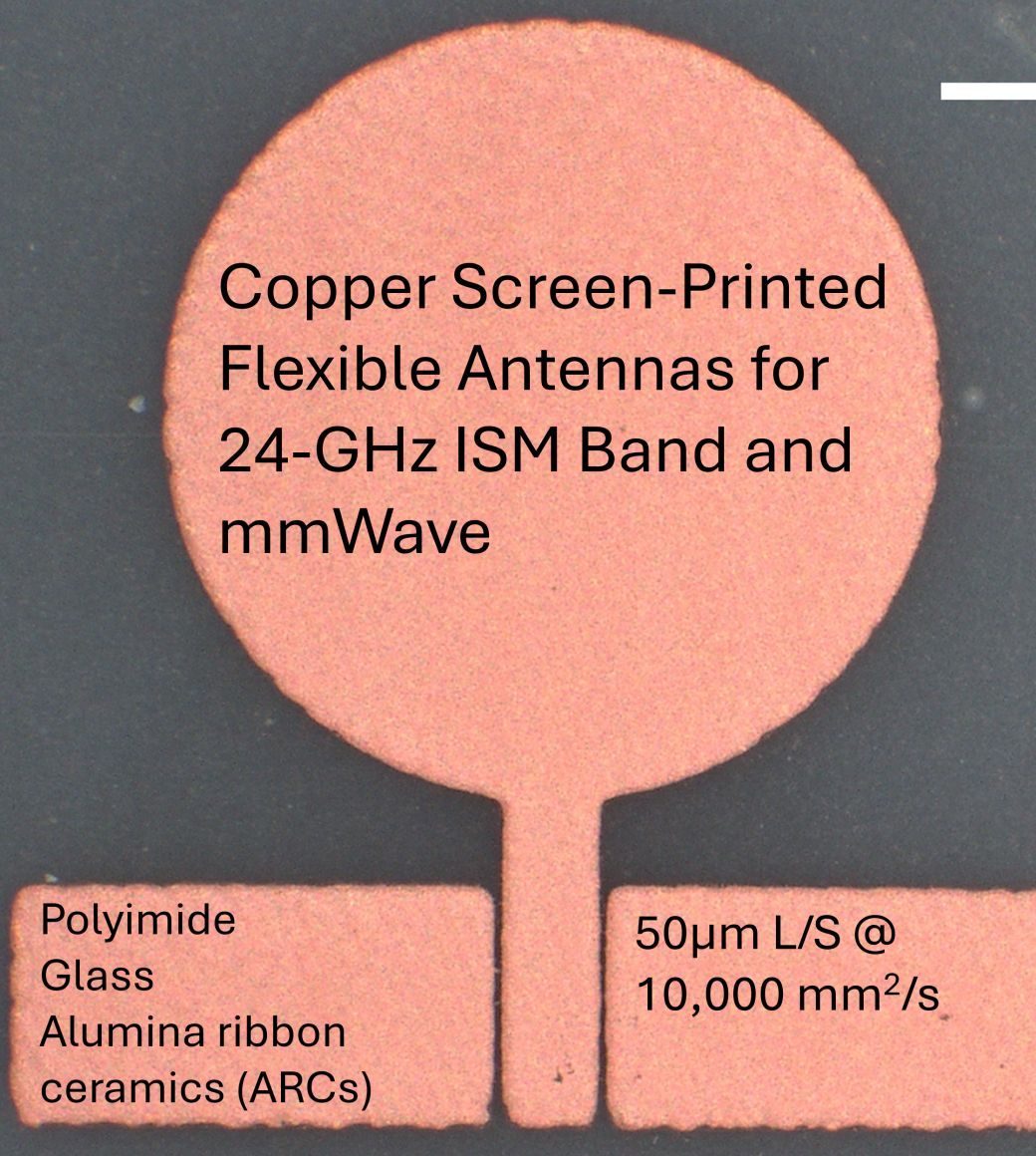
Congratulations to the incredible team at NoiseFigure Research and the University of Washington, Seattle, for their recent publication in the...
